The demand for customized vehicles has grown rapidly in recent years, especially in industries focused on transportation, logistics, mobile services, and recreational travel. One of the most popular platforms for these transformations is the Sprinter van. From refrigerated delivery vehicles to luxury camper vans, mobile workshops, and emergency response units, the process of modifying a van for a specialized purpose is known as Sprinter van upfitting.
As these projects become more advanced, builders and fleet operators are searching for materials that are lightweight, durable, easy to maintain, and capable of withstanding demanding environments. This is where fiberglass-reinforced plastic (FRP) has become an increasingly valuable solution.
For companies like Stabilit America, FRP technology represents more than just surface protection. It provides structural and functional advantages that improve the long-term performance of commercial and recreational vehicle conversions.
What is Sprinter van upfitting?
Sprinter van upfitting refers to the process of modifying or repurposing a standard cargo or passenger van for a specific use. Instead of using the vehicle in its factory configuration, builders customize the interior and sometimes the exterior to support specialized operations or lifestyles.
Common examples include:
- Refrigerated delivery vans.
- Camper van conversions.
- Mobile medical units.
- Food delivery vehicles.
- Mobile workshops.
- Service and utility vans.
The goal of upfitting is to maximize efficiency, functionality, durability, and comfort while maintaining vehicle reliability and performance.
Why does material selection matter in van conversions?
Every component inside an upfitted Sprinter van affects weight, maintenance, insulation, and long-term durability. Traditional materials like wood, metal, or drywall-style panels often create challenges due to moisture exposure, cleaning requirements, or added weight.
FRP materials solve many of these issues because they offer:
- High impact resistance.
- Lightweight construction.
- Moisture protection.
- Easy cleaning and maintenance.
- Long-term durability.
- Resistance to corrosion and chemicals.
These characteristics make FRP ideal for commercial transportation and mobile living applications where reliability is essential.
The role of FRP in Sprinter van upfitting
Lightweight performance for better efficiency
Weight is one of the most important considerations in vehicle conversions. Heavier materials reduce fuel efficiency and can limit payload capacity. FRP materials are significantly lighter than many traditional construction materials while still delivering exceptional strength.
This lightweight performance helps maintain vehicle efficiency without sacrificing durability or functionality.
Moisture and mold resistance
Many van conversions are exposed to humidity, condensation, temperature changes, and water intrusion. Camper vans, refrigerated vehicles, and mobile service units are especially vulnerable to moisture-related damage.
FRP surfaces are non-porous and highly resistant to water absorption. Unlike wood panels or untreated surfaces, FRP does not rot, swell, or support mold growth. This creates a cleaner and more reliable interior environment.
Easy maintenance and hygiene
Cleanability is critical in many upfitting applications, especially for refrigerated transportation, food service, or medical vehicles. FRP surfaces are smooth and easy to sanitize, allowing operators to maintain hygienic conditions with minimal effort.
This is one reason why FRP materials are commonly used in transportation industries that require strict cleanliness standards.
Durability in high-traffic environments
Commercial vans experience constant movement, vibration, loading activity, and equipment impact. Traditional materials may crack, chip, or deteriorate over time under these conditions.
FRP materials are engineered for durability. Their impact resistance helps protect walls, ceilings, storage compartments, and cargo areas from daily wear and tear.
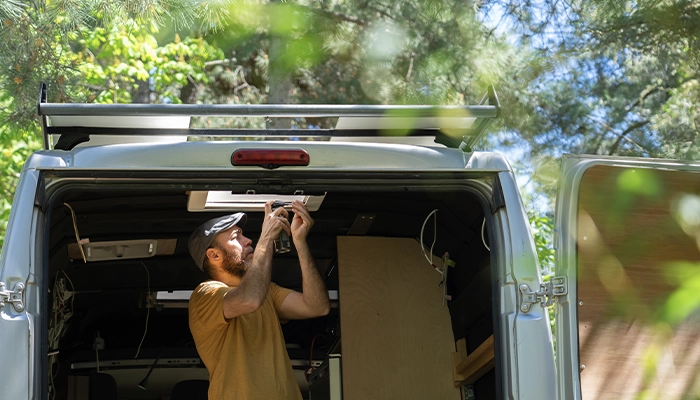
FRP applications in refrigerated Sprinter vans
One of the fastest-growing uses of Sprinter van upfitting is refrigerated transportation. Food delivery, pharmaceuticals, floral logistics, and temperature-sensitive cargo all require controlled environments.
FRP is especially valuable in refrigerated vans because it helps create:
- Moisture-resistant interiors.
- Easy-to-clean surfaces.
- Lightweight insulated structures.
- Durable wall and ceiling systems.
The use of FRP for truck applications has already demonstrated how effective fiberglass-reinforced plastic can be in transportation environments that demand sanitation and durability.
Camper van and RV conversions
The van life movement has increased interest in luxury camper van conversions. Owners want interiors that feel modern, clean, and durable without adding unnecessary weight.
FRP materials can be used in:
- Interior wall panels.
- Bathroom enclosures.
- Storage compartments.
- Kitchen areas.
- Ceiling surfaces.
Because FRP resists moisture and stains, it performs especially well in compact living spaces where ventilation and humidity can become issues.
Additionally, the lightweight nature of FRP helps maintain driving efficiency, which is essential for long-distance travel.
Mobile service and utility vehicles
Many businesses convert Sprinter vans into mobile workstations for plumbing, electrical services, telecommunications, maintenance, and field repairs.
These vehicles require durable interior surfaces capable of handling tools, equipment, and daily operational stress. FRP materials help create organized, long-lasting interiors that resist scratches, impacts, and chemical exposure.
The result is a professional-looking workspace that can withstand years of demanding use.
Advantages of FRP over traditional materials
Compared to wood
Wood is commonly used in van conversions due to its availability and appearance, but it absorbs moisture, adds weight, and may warp over time. FRP offers better resistance to humidity and requires less maintenance.
Compared to metal
Metal surfaces can corrode, dent, and conduct heat or cold into the vehicle interior. FRP avoids corrosion issues while also helping improve insulation performance.
Compared to standard plastic panels
Basic plastic panels may crack or degrade under heavy use. FRP combines fiberglass reinforcement with durable resin systems, resulting in superior structural strength and longevity.
Why Stabilit America is a trusted source for FRP solutions
As one of the industry leaders in advanced composite materials, Stabilit America provides high-performance FRP products designed for demanding transportation and construction applications.
From commercial transportation to custom vehicle interiors, Stabilit’s expertise in fiberglass-reinforced plastic solutions helps builders create durable, lightweight, and reliable upfitting systems.
Whether the goal is a refrigerated delivery van, mobile service vehicle, or camper conversion, Stabilit America offers solutions engineered for long-term performance.
The future of Sprinter van upfitting
The evolution of mobile workspaces, delivery systems, and camper van culture has transformed the way vehicles are designed and used. Modern upfitting projects require materials that balance strength, weight, hygiene, and durability.
FRP has emerged as one of the most practical materials for these applications because it meets the demands of both commercial and recreational vehicle conversions.
As innovation in transportation continues to grow, FRP materials will remain a key component in building safer, cleaner, and more efficient mobile environments.
Frequently asked questions
Can FRP materials help reduce noise inside a Sprinter van?
Yes. FRP systems can contribute to a quieter interior environment when combined with insulation layers and proper installation methods. This is especially useful for camper vans, mobile offices, and delivery vehicles that spend long hours on the road.
Are FRP surfaces suitable for custom interior finishes?
Absolutely. FRP materials are available in multiple textures, colors, and finishes, allowing builders to create interiors that look professional, modern, or residential depending on the purpose of the van conversion.
How do FRP materials perform in extreme temperatures?
FRP materials maintain their structural stability across a wide temperature range. This makes them a reliable option for refrigerated vans, hot climate applications, and vehicles exposed to constant outdoor conditions.
Is FRP a good option for fleet vehicle standardization?
Yes. Many fleet operators use FRP because it provides consistent quality, easy maintenance, and long-term durability across multiple vehicles. This helps simplify repairs, cleaning procedures, and operational efficiency.
Can FRP panels improve the resale value of an upfitted van?
High-quality FRP interiors may help preserve the condition of the vehicle over time by reducing visible wear, moisture damage, and corrosion. A clean and durable interior can make the vehicle more attractive to future buyers.
Sources consulted:
- https://thevansmith.com/blogs/conversion-van/sprinter-interior-materials-finishes
- https://dvamechanics.com/blogs/sprinter/sprinter-van-upfitting-planning-guide

Stabilit America Inc. is a leading North American manufacturer of fiberglass reinforced panels (FRP) and polycarbonate sheets, with over 65 years of experience. The company offers the widest range of acrylic, polyester, and polycarbonate laminates, backed by international certifications (USDA, Greenguard, FM, ISO 9001, among others), serving industries such as industrial construction, transportation, and sustainable building.