
A polycarbonate roof brings natural light, protection, and a modern finish to any project, but its performance doesn’t depend on the material alone: it also depends on choosing the right system and carrying out a well-planned installation. In fact, issues like yellowing or leaks are often tied more to how the roof was installed than to the quality of the polycarbonate itself.
That’s why, when someone searches for how to install polycarbonate roofing, the answer goes beyond a simple list of steps: it means understanding how to achieve a durable, functional result, and how to recognize an improper installation early, before it becomes a bigger problem.
Macrolux Multiwall cellular polycarbonate panels from Stabilit America are designed for roofs, walls, partitions, and self-supporting structures. Their multi-cell channel structure delivers strength, thermal insulation, and excellent light transmission, making it a reliable choice for residential, agro-industrial, industrial, and construction projects.
What to check before installing Macrolux Multiwall polycarbonate
Before placing the first panel, it’s important to confirm that the structure, slope, supports, and fastening system are compatible with the type of roof being installed.
At this stage, Macrolux Multiwall cellular polycarbonate panels should not be treated as a generic product. Panel thickness, curvature radius, and the profile system all need to respond to the specific requirements of each project.
Factors such as thermal expansion, condensation drainage, UV-protection orientation, support spacing, and proper sealing should also be considered from the design stage. Addressing these points early makes the installation more precise and reliable.
Key steps to install cellular polycarbonate correctly
It’s always best to follow the manufacturer’s technical specifications and the specific conditions of the project. These steps help organize the process before placing the panels:
- Proper storage: Keep Macrolux Multiwall panels in a covered area, on a flat, dry surface, away from direct sunlight before installation.
- Precise cutting: Cut the panel with a utility knife or a fine-tooth saw (for thicknesses under 16 mm), using compressed air or a vacuum to clear dust from the cells.
- Correct orientation: Place the UV-protected side — marked with the blue Macrolux symbol — facing outward, with the cells or channels running vertically to allow drainage.
- Minimum slope: Maintain a slope of at least 10% or 5° to ensure proper water runoff.
- Room for thermal expansion: Leave the recommended clearance per linear meter, since polycarbonate expands and contracts with temperature changes.
- Compatible profiles and sealing: Use polycarbonate or aluminum profiles (never PVC) and a neutral, alcohol-based sealant, without fully blocking the panel’s cells.
Following these steps keeps the installation organized and helps prevent leaks, panel stress, or premature system failures.
Warning signs of an installation that could be improved
Even with a good product, certain job-site details can affect the final result if they aren’t addressed from the start. Before assuming the material is at fault, it’s worth reviewing how the installation was carried out, since most issues are related to placement rather than the polycarbonate itself.
Some signs worth checking for include leaks at joints or trims, recurring condensation, visibly stressed panels, or uneven wear in appearance over time. In general, these cases tend to relate to poorly sealed profiles, insufficient allowance for thermal expansion, incorrect UV-protection orientation, or unevenly spaced supports.
Catching these signs early allows for simple adjustments — such as checking seals, profiles, or fasteners — before they turn into a larger problem. Following the technical installation guide from the start is the best way to avoid these issues and get the most out of Macrolux Multiwall cellular polycarbonate.
Care that extends the roof’s performance
Once installed, Macrolux Multiwall cellular polycarbonate requires little upkeep, but a few habits help maintain its appearance and function over time:
- Check joints and seals periodically, especially in areas with heavy rainfall.
- Avoid walking on the panels to preventunnecessary stress.
- Use neutral cleaners, free of abrasives or solvents, to preserve the finish.
- Remove the protective film only after the installation is complete.
Following these recommendations, together with a well-planned installation, helps the system maintain its performance and appearance for years to come.
Why choose Macrolux Multiwall for your project
Macrolux Multiwall cellular polycarbonate isn’t meant as a one-size-fits-all solution for covering surfaces: its value lies in adapting to the structure type, project geometry, and real installation conditions.
Greater thermal and lighting control
Thanks to its multi-cell structure, Macrolux Multiwall offers an excellent balance between natural light transmission and thermal insulation, making it ideal for greenhouses, industrial buildings, carports, and commercial spaces that need efficient lighting without sacrificing comfort.
Application versatility
This system adapts to roofs, translucent walls, domes, and self-supporting structures, making it easier to integrate into projects where natural light needs to work together with stability and design.
Technical support from the specification stage
Having a clear installation guide — from storage to final sealing — reduces improvisation on site and supports better decisions around fastening, support, and visual continuity. In projects where every detail matters, correct specification is the smartest form of prevention.
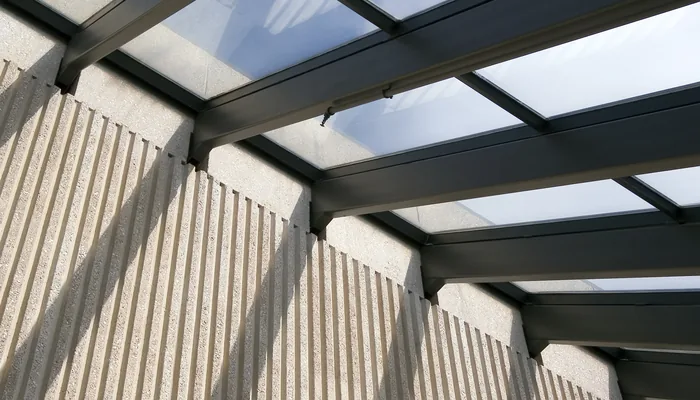
Take your project beyond a correct installation
A well-specified cellular polycarbonate roof does more than avoid installation errors: it helps create more functional, better-lit spaces that are ready to meet the real conditions of each project.
Macrolux Multiwall cellular polycarbonate from Stabilit America offers solutions for roofs, walls, partitions, and translucent structures that require technical precision, structural integration, and a professional finish. If you want to work with polycarbonate the smart way, Macrolux Multiwall helps take your specification to the next level.
Frequently Asked Questions
What thickness of Macrolux Multiwall cellular polycarbonate should I choose?
It depends on the span between supports and the intended use; the most common thicknesses range from 6 mm to 16 mm, each with its own recommended bending radius.
Can cellular polycarbonate be curved on site?
Yes, Macrolux Multiwall can be cold-formed within the minimum bending radius recommended for its thickness, with no heat required.
How often should I check the roof’s sealing?
An inspection at least once a year, or before the rainy season, is recommended to check joints and profiles.
Does Macrolux Multiwall polycarbonate need special maintenance?
No, regular cleaning with a neutral soap is enough — just avoid contact with solvents or abrasives.
Sources consulted:
- https://polycarbonatex.co.uk/blogs/news/common-polycarbonate-roofing-mistakes-and-how-to-avoid-them
- https://ameriluxinternational.com/wp-content/uploads/2021/pdf-downloads/install-guides/amerilux-multiwall-install-guide.pdf
- https://www.plast-x.com/wp-content/uploads/2025/06/Corrugated_panel_installation_guide_eng.pdf