In the world of thermoplastics, the mechanical properties of polycarbonate set it apart as one of the most versatile and reliable materials available today. Known for its outstanding impact resistance, flexibility and long-term performance, polycarbonate has become an essential material in industries ranging from construction and agriculture to transportation and electronics.
At Stabilit America, we design advanced polycarbonate panels that harness the most important mechanical properties of polycarbonate—strength, clarity, toughness and weather resistance—to offer innovative solutions for both industrial and residential needs. Whether you’re designing a greenhouse, a skylight system or an institutional façade, understanding the mechanical properties of polycarbonate will help you select the right panel for your project.
What Is Polycarbonate?
Polycarbonate is a transparent thermoplastic that balances durability, impact resistance and light transmission. Its carbonate-based molecular structure gives it:
- High toughness and ductility
- Excellent optical clarity
- Strong temperature resistance
These core mechanical properties of polycarbonate make it ideal for applications that demand strength, safety and design flexibility at the same time—such as safety glazing, roofing systems, greenhouse coverings, machine guards, canopies and architectural façades.
Because the mechanical properties of polycarbonate remain stable across a wide range of temperatures and environmental conditions, it has become a go-to material wherever traditional glass or brittle plastics may fail.
Exploring Polycarbonate’s Mechanical Marvels
When we talk about the mechanical properties of polycarbonate, we’re referring to a combination of traits that work together to create a robust, adaptable material.
Impact Resistance
One of the most remarkable mechanical properties of polycarbonate is its impact resistance. Polycarbonate:
- Resists breakage with strength levels up to 250 times greater than glass
- Maintains its toughness even at low temperatures
- Reduces the risk of shattering, which improves safety
This makes polycarbonate a preferred choice for security glazing, machine guards, helmets, shields and protective panels, where failure could have serious consequences.
Flexibility and Ductility
Another key mechanical property of polycarbonate is its ductility—its ability to bend and form without cracking.
- Polycarbonate can be cold-bent to certain radii depending on thickness, making it suitable for curved roofs, canopies and façades.
- Its flexibility allows designers to create complex shapes without sacrificing structural performance.
This combination of formability and strength is a major reason the mechanical properties of polycarbonate are so valued in architectural and industrial design.
Temperature Resistance
Polycarbonate is designed to withstand a wide range of temperatures, typically from around -40°C to 120°C, without losing structural integrity under normal use.
- At low temperatures, it maintains impact resistance and doesn’t become excessively brittle.
- At higher temperatures, it retains enough stiffness to serve in many outdoor and industrial applications (within recommended limits).
This thermal stability is a crucial part of the mechanical properties of polycarbonate, allowing it to operate in demanding climates and environments.
Durability Over Time
The long-term mechanical properties of polycarbonate depend heavily on UV protection and surface technology. High-quality, UV-stabilized polycarbonate:
- Resists UV light and yellowing
- Maintains impact strength and clarity after prolonged outdoor exposure
- Offers good resistance to weathering and abrasion, especially when protective coatings are used
These durability traits help ensure that the mechanical properties of polycarbonate are not just impressive on day one, but continue to perform over many years with minimal maintenance.
Polycarbonate in Industrial Applications
The mechanical properties of polycarbonate make it indispensable in industrial settings, where reliability and safety are non-negotiable and downtime is costly.
High-Performance Panels
Polycarbonate panels used in industrial environments can:
- Resist harsh chemicals and corrosion when properly specified
- Withstand impacts and vibrations from equipment and heavy use
- Provide clear visibility for supervision and safety without sacrificing strength
These characteristics make the mechanical properties of polycarbonate extremely valuable in sectors such as petrochemical plants, mining facilities, manufacturing plants and water treatment infrastructure.
Commercial and Institutional Applications
In commercial and institutional spaces—like malls, supermarkets, museums, offices and schools—the mechanical properties of polycarbonate support:
- Durable, low-maintenance glazing and skylights
- Hail-resistant and impact-resistant roofing sheets
- Bright, welcoming interiors with controlled natural light
Polycarbonate’s ability to blend strength, safety and design freedom allows architects to create visually appealing environments that still respect performance and safety requirements.
Architectural and Transportation Hubs
For sports facilities, airports, transportation hubs and bus terminals, the mechanical properties of polycarbonate enable:
- Large-area roofing and façades that are lightweight yet robust
- Transparent or translucent elements that withstand crowds, impacts and weather
- Complex geometries and wide spans with reduced structural loads
In short, polycarbonate allows engineers and architects to achieve design goals that would be more difficult or expensive using traditional materials—all thanks to the outstanding mechanical properties of polycarbonate.
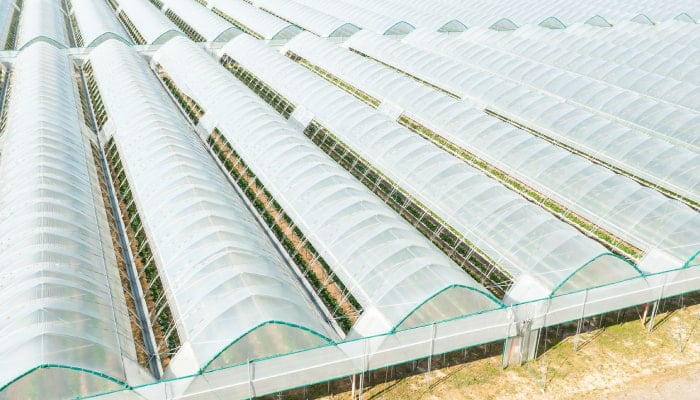
Agricultural Greenhouses
In agricultural greenhouses, UV-protected polycarbonate panels:
- Enhance crop growth by optimizing light transmission and diffusion
- Provide long-term durability against weather, hail and temperature changes
- Deliver lightweight, easy-to-install solutions that reduce structural demands
Here again, the mechanical properties of polycarbonate—impact resistance, lightweight strength and thermal performance—translate directly into better productivity and lower maintenance for growers.
Polycarbonate in Home Applications
The versatility and mechanical properties of polycarbonate also extend to residential design, where safety, aesthetics and practicality must work together.
Common home applications include:
- Patio and terrace roofing: Polycarbonate roofing admits natural light while resisting wind, rain, hail and UV exposure. The mechanical properties of polycarbonate ensure that these coverings stay safe and functional for years.
- Carports and pergolas: Lightweight panels reduce structural requirements and allow homeowners to install or retrofit protective covers more easily.
- Wall panels in kitchens, laundry rooms and utility spaces: Polycarbonate benefits from moisture resistance and easy cleaning, making it a practical option where humidity and splashes are common.
- Decorative and partition panels: The mechanical properties of polycarbonate provide structural strength while enabling modern, translucent designs for room dividers or accent walls.
In residences, the mechanical properties of polycarbonate offer an excellent balance between design freedom, safety and durability—often outperforming traditional glass or brittle plastics.
Advantages of Stabilit America’s Polycarbonate Panels
Stabilit America’s polycarbonate solutions—such as our Macrolux product family—are specifically engineered to take full advantage of the mechanical properties of polycarbonate while adding application-specific benefits.
Key advantages include:
- Optimized strength-to-weight ratio: Our panels deliver high mechanical performance at significantly lower weight than glass or metal panels, easing installation and reducing structural demands.
- UV stability and weather resistance: UV-protected products help maintain the mechanical properties of polycarbonate over time, reducing yellowing and preserving impact resistance.
- Thermal performance: Multiwall polycarbonate panels contribute to better insulation, reducing energy consumption for heating and cooling in industrial, institutional and residential settings.
- Design flexibility: Available in different thicknesses, profiles, colors and configurations, our panels let you apply the mechanical properties of polycarbonate where they’re needed most—roofs, skylights, façades, canopies and more.
- Low maintenance requirements: Thanks to their durable surfaces and resistance to weathering, Stabilit America’s polycarbonate panels require minimal maintenance compared to many traditional materials.
For builders, designers and owners, the advantages of Stabilit America’s polycarbonate panels translate into systems that are strong, safe, efficient and visually appealing, all built on the exceptional mechanical properties of polycarbonate.
Frequently Asked Questions (FAQs)
What are the mechanical properties of polycarbonate?
About FRP panels, the most important mechanical properties of polycarbonate include:
- Very high impact resistance (up to 250 times stronger than glass)
- Excellent flexibility and ductility, allowing bending and forming without cracking
- Strong temperature resistance, typically functioning from about -40°C to 120°C
- Long-term durability against weathering, UV exposure and many everyday impacts
These combined mechanical properties of polycarbonate make it ideal for demanding construction, industrial and residential applications.
What are the properties of polycarbonate compared to FRP panels?
Polycarbonate and FRP panels share some advantages—both are lightweight, impact-resistant and durable. However, the mechanical properties of polycarbonate provide:
- Higher optical clarity and light transmission
- Greater suitability for transparent or translucent roofing, skylights and glazing
- Excellent impact resistance in clear or tinted sheets
FRP panels, on the other hand, are typically opaque and optimized for hygienic, corrosion-resistant wall and ceiling systems. Both materials complement each other in a complete building envelope.
What is so special about the mechanical properties of polycarbonate?
What makes the mechanical properties of polycarbonate so special is the rare combination of:
- Transparency similar to glass
- Toughness stronger than many metals on a weight basis
- Flexibility that allows curved and complex shapes
This balance of clarity, toughness and formability is why polycarbonate is used in applications ranging from safety glazing and machine guards to greenhouses and architectural roofing systems.
What are the properties of PC (polycarbonate) in construction?
In construction, the key mechanical properties of polycarbonate (PC) are:
- High impact resistance, which is crucial for hail, vandalism and safety glazing
- Good temperature tolerance for outdoor use
- Lightweight nature, reducing structural and installation demands
- Excellent optical clarity and controlled light diffusion, especially in multiwall systems
These properties make PC suitable for roofing systems, skylights, façades, canopies and protective barriers.
Is polycarbonate stronger than glass?
Yes. One of the most important mechanical properties of polycarbonate is that it is about 250 times stronger than glass in impact resistance while being significantly lighter. This makes polycarbonate:
- Safer, as it is much less likely to shatter
- Easier to handle and install on site
- Often more energy-efficient, thanks to lower structural requirements and better insulating configurations like multiwall sheets
Does polycarbonate turn yellow over time?
High-quality, UV-stabilized polycarbonate, such as Stabilit America’s panels, is specifically formulated to resist yellowing and degradation over time. Properly protected, the mechanical properties of polycarbonate—including clarity and impact resistance—are preserved even under prolonged outdoor exposure. Choosing UV-protected products and following installation guidelines helps ensure long-lasting performance.

Stabilit America Inc. is a leading North American manufacturer of fiberglass reinforced panels (FRP) and polycarbonate sheets, with over 65 years of experience. The company offers the widest range of acrylic, polyester, and polycarbonate laminates, backed by international certifications (USDA, Greenguard, FM, ISO 9001, among others), serving industries such as industrial construction, transportation, and sustainable building.