When planning a project involving translucent roofing or enclosure systems, most of the attention tends to focus on installation: the correct slope, the profile system, and sealing. However, many of the problems later attributed to installation—marks, deformation, or cloudy areas in the material—actually originate before that stage, during transportation, unpacking, or the time the sheets spend in storage at the job site.
Understanding how to properly handle and store polycarbonate sheets helps ensure that the material reaches the roof in the same condition in which it left the factory.
Transportation: The first point where things can go wrong
Polycarbonate sheets are lightweight, but that does not make them immune to impacts or excessive bending. During transportation, they should be kept fully supported in a flat position or vertically supported along their long edge, avoiding situations where they bend over narrow surfaces or come into contact with sharp edges that could scratch the surface or damage the internal channels.
Unprotected corners are particularly vulnerable: an impact to a corner can compromise the rigidity of the entire sheet, even if the damage is not immediately visible.
Unpacking: Be careful with what may seem like a minor step
When an order arrives, it is recommended to inspect the packaging before handling the sheets individually and to avoid dragging one sheet across another, since friction between surfaces can create micro-scratches that may later affect light transmission.
Storage: Shade, a flat surface, and moderate stacking
Storage is probably the stage where the most damage can be prevented. Sheets should be stored in a covered area, away from direct heat sources and prolonged exposure to sunlight, since heat buildup beneath the protective film can make the film more difficult to remove later.
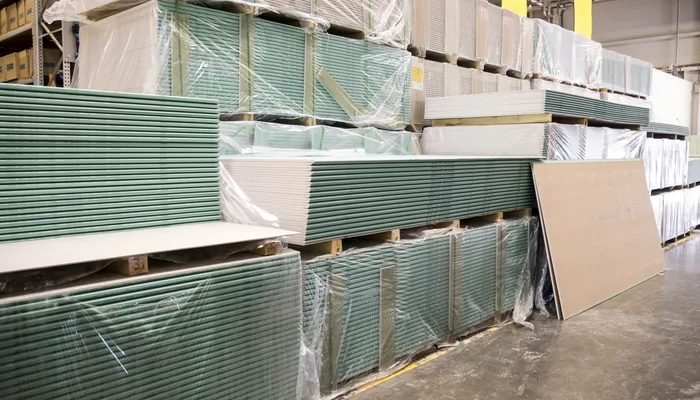
On a flat, even surface with continuous support, sheets can be stacked to a moderate height; excessive stacking or uneven support points can cause permanent curvature over time. When storage extends for several weeks, it is preferable to keep the sheets inclined and properly supported rather than leaving them completely flat outdoors.
This care during the pre-installation stage is particularly important for Multiwall Panels, whose internal cell structure provides thermal and acoustic insulation but can also be compromised if the material is subjected to uneven weight loads during storage.
The protective film: Why it should not be removed too early
Each sheet is delivered with a protective film that serves a dual purpose: it prevents scratches during handling and identifies which side has UV protection. Removing the film too early—even out of curiosity or to “inspect” the product—leaves the surface exposed to dust, moisture, and scratches that can later be difficult to correct.
As a practical reference, the side marked with printed or light-colored film should face outward once the sheet is installed; for this reason, it is recommended to keep the film intact until the actual installation.
From the job site to the roof: A transition worth planning
Before lifting the sheets onto the roof, it is good practice to have cutting tools ready—such as a utility knife, jigsaw, or similar tool—and to make sure the installation team is familiar with the material’s thermal expansion, which behaves differently from other enclosure systems.
Before lifting the sheets onto the roof, it is good practice to have the cutting tools ready and make sure the installation team understands how the material responds to thermal expansion. Knowing how to install polycarbonate roofing sheets can also help the team prepare for the steps that follow, from positioning the panels to completing the final seal.
A good start sets the course for the entire project
The final result of a translucent roof or enclosure depends not only on how the material is installed but also on how it was handled before reaching that stage. Paying attention to transportation, unpacking, and storage reduces the risk of unnecessary replacements and helps the project move forward without complications.
If the installation team has questions about handling a specific model or thickness, it is worth addressing them before work begins rather than trying to resolve them along the way.
Frequently Asked Questions
How long can polycarbonate sheets be stored before installation?
There is no strict time limit, but the longer the sheets are stored, the more important it becomes to maintain proper shade and support conditions to prevent deformation.
Can the protective film be removed before lifting the sheet onto the roof?
It is recommended to leave the film in place until the sheet has been secured in its final position, as it also identifies the side with UV protection.
Can the sheets be stacked directly on the floor?
It is preferable to place them on a flat, even surface, avoiding direct contact with the ground or uneven support points.
Does heat during transportation affect the material?
Prolonged exposure to heat can make the protective film more difficult to remove later, so it is best to avoid leaving the sheets in direct sunlight before installation.

Stabilit America Inc. is a leading North American manufacturer of fiberglass reinforced panels (FRP) and polycarbonate sheets, with over 65 years of experience. The company offers the widest range of acrylic, polyester, and polycarbonate laminates, backed by international certifications (USDA, Greenguard, FM, ISO 9001, among others), serving industries such as industrial construction, transportation, and sustainable building.