Once a project has been designed around Multiwall panels, a second, less obvious but equally important question often comes up: which profiles are needed for proper installation? It is common to find only a short list, such as U profile and H profile, without much context about when to use each one or how they affect the finish and performance of the system. This is precisely the question that often comes up among installers and contractors before finalizing a material estimate.
What are profiles used for in a Multiwall system?
Multiwall polycarbonate panels have internal channels that give them their lightweight construction and thermal insulation capabilities. When those channels are left exposed, they can allow dust, insects, and moisture to enter, which can eventually affect the panel’s light transmission and appearance.
Profiles help close these exposed ends and join sheets together while accounting for the material’s natural expansion and contraction as temperatures change. An improperly selected profile can affect more than aesthetics: it may restrict this natural movement and create stress within the sheet.
U profile: Closing and protecting panel edges
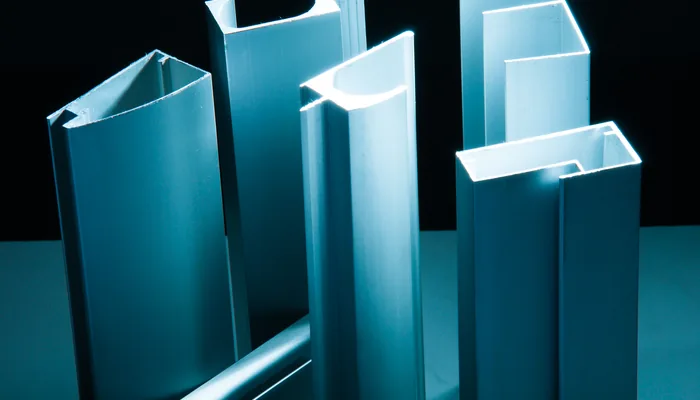
The U profile is installed along the ends of the panel, typically at the top and bottom. Its primary function is to protect the sealing tape covering the open channels, helping prevent dirt and condensation from accumulating inside the panel’s internal structure.
In sloped installations, it is common to make small drainage holes in the lower U profile so that moisture caused by condensation can escape instead of becoming trapped.
In practice, the U profile serves as the closure point that helps protect the panel system as it ages.
H profile: Joining panels and creating continuity
When a project requires more than one sheet installed side by side, the H profile comes into play. Its purpose is to join two adjacent panels while creating visual continuity across the surface without exposed screws at the connection.
It also allows some movement between the sheets, helping accommodate the material’s natural thermal expansion without compromising the seal.
How to choose between U and H profiles
In most projects, the choice isn’t about selecting one profile or the other but about using them according to the installation geometry. The U profile closes the free edges of each sheet, while the H profile is used where two sheets meet.
Panel width, the number of sheets required to cover the opening, and whether the installation is for a roof or wall ultimately determine how much of each profile is needed.
Before cutting or drilling any sheet, it is worth reviewing the basic steps in how to install polycarbonate roofing sheets.
A small detail that can prevent major installation problems
Choosing the right U and H profiles is not an optional detail in the installation process. It helps preserve the performance expected from a Multiwall panel system.
If your project is still defining its accessories, discussing the material list with the Stabilit America technical team before finalizing it can help ensure that each profile matches the thickness and configuration of your Macrolux panels.
Frequently Asked Questions
Is the U profile used on all four sides of the panel?
It is generally installed on edges that do not connect to another sheet, such as the top and bottom edges or free side edges, depending on the project orientation.
Does the H profile replace sealing tape?
No. The tape seals the panel’s internal channels, while the H profile protects the connection and provides a finished appearance between two panels.
Are profiles available in the same color as the panel?
Options are available in different finishes. It is recommended to confirm availability with the supplier for the specific panel color being used.
Is it necessary to use both profiles in the same installation?
It depends on the design. A single panel may only require a U profile, while a connection between two or more sheets will require an H profile.

Stabilit America Inc. is a leading North American manufacturer of fiberglass reinforced panels (FRP) and polycarbonate sheets, with over 65 years of experience. The company offers the widest range of acrylic, polyester, and polycarbonate laminates, backed by international certifications (USDA, Greenguard, FM, ISO 9001, among others), serving industries such as industrial construction, transportation, and sustainable building.