When engineering or procurement teams select roofing and wall systems for an industrial building, FRP and PVC often end up on the same comparison list. At first glance, they may seem like similar alternatives, but the real differences become more apparent over time as panels are exposed to sunlight, chemical vapors, impacts, and fire-safety requirements.
This guide looks at FRP vs. PVC roofing panels from a long-term performance perspective and explains why Resolite Industrial FRP Panels deserve consideration when evaluating materials for demanding environments.
Look beyond the initial cost
A panel may be purchased once, but its true cost continues throughout its service life through replacements, maintenance, plant downtime, and operational risk.
That is why comparing FRP and PVC roofing panels should involve more than the initial price. Four factors deserve particular attention: UV exposure, chemical resistance, impact performance, and fire behavior.
Let’s look at each one.
UV exposure: Damage you may not notice in the first year
Sunlight is one of the main factors that contributes to roofing material degradation.
Resolite panels address weather exposure through their material formulation, using polyester resins with acrylic modification, UV stabilizers, and an integrated Corrosion, Weathering Veils on the panel surfaces.
This means weather protection is incorporated into the panel rather than relying solely on coatings or films applied later.
When comparing any alternative, including PVC, it is worth asking how UV protection is achieved and what kind of real-world exposure history supports its performance.
Color and finish should also be discussed during the specification stage so that aesthetic and functional expectations are aligned from the beginning.
Chemicals and corrosion: The environment matters
In process plants, water treatment facilities, galvanizing operations, or fertilizer production facilities, even the surrounding air can create aggressive conditions.
Fiberglass panels made with polyester resin do not rust, rot, or support mold growth, which is one reason they are used for roofing and siding systems in environments where other materials may deteriorate more quickly.
The Resolite CR line uses a halogenated isophthalic resin. Compared with orthophthalic formulations, isophthalic resin provides better retention of physical properties and improved chemical resistance.
Still, “corrosion resistant” is not an absolute term. Performance depends on the chemical agent, concentration, temperature, and other conditions specific to the project.
If you want to better understand how this concept applies when comparing FRP with other substrates, including PVC, what does “corrosion resistant” mean? explores the topic in greater detail. For particularly demanding environments, the appropriate resin formulation should be selected according to the project’s actual exposure conditions.
Impact and loads: Resilience in everyday use
On an industrial roof, impact does not come only from hail or wind. Maintenance personnel, tools, and repeated storm loads can also place stress on the roofing system.
Resolite panels combine fiberglass reinforcement and resin to create a structure that is both strong and resilient. They can flex under a temporary load and return to their original shape after that load is removed.
For projects where maintenance personnel need to access the roof, Resolite also offers Tred-Safe, a panel designed to accommodate foot traffic for inspection and maintenance activities when installed within the recommended support spacing.
Fire performance: A requirement that should never be an afterthought
In industrial projects, fire performance is often a design requirement rather than an optional feature.
For applications where fire classification is part of the specification, Resolite CR fire-rated panels are manufactured with a fire-retardant resin system and have a UL flame spread index of 25 under ASTM E84 testing.
They also combine corrosion resistance with weathering performance, which can be valuable in facilities where chemical exposure, heat, and outdoor conditions occur together.
It is important to keep the classification in context. A numerical flame spread rating is not intended to represent the actual fire hazard of a material under real fire conditions.
Project teams should always verify fire requirements against applicable codes and consult the project’s engineer. The same approach applies when evaluating any alternative roofing panel: ask for the relevant classification and the test method that supports it.
Which roofing panel should you specify?
The best decision between FRP vs. PVC roofing panels is not made by looking at a catalog alone. It should be based on how the roofing system is expected to perform over the next ten or fifteen years in the actual facility.
Consider the building’s chemical exposure, UV conditions, impact risks, maintenance needs, fire requirements, and environmental conditions before making a final specification.
If you need to evaluate which panel and profile fit your operating environment, the Stabilit America and Resolite team can help review the requirements of the project.
Request a quote and discuss the application before finalizing your roofing specification.
Resolite for industrial roofing projects
Resolite has decades of experience manufacturing FRP panels for industrial and commercial construction.
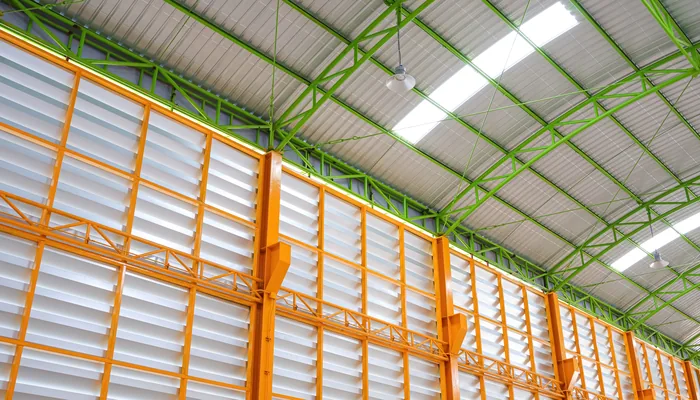
Its portfolio includes opaque and translucent panels, fire-rated options, walkable solutions, and a variety of profiles and colors designed to accommodate different building configurations.
This gives project teams the ability to address roofing, sidewall cladding, and natural daylighting needs within the same product family.
Frequently asked questions
Is FRP better than PVC for industrial roofing?
It depends on the environment. Resolite FRP is designed for applications involving conditions such as intense sun exposure, chemical environments, and specific fire-performance requirements. Each project should be evaluated according to its actual conditions.
Are Resolite panels fire rated?
A Resolite line is available with a UL flame spread index of 25. The applicable fire requirements should be confirmed for each project. Additionally, Resolite offers Factory Mutual Approved panels, which provide a higher tier of fire resistance with a flame spread rating of 15.
Can you walk on Resolite roofing panels?
Resolite offers Tred-Safe, which is designed for maintenance foot traffic when installed according to the recommended support spacing.
Are translucent options available for natural daylight?
Yes. Resolite offers translucent panels in different colors and light-transmission levels.

Stabilit America Inc. is a leading North American manufacturer of fiberglass reinforced panels (FRP) and polycarbonate sheets, with over 65 years of experience. The company offers the widest range of acrylic, polyester, and polycarbonate laminates, backed by international certifications (USDA, Greenguard, FM, ISO 9001, among others), serving industries such as industrial construction, transportation, and sustainable building.