The construction industry is under constant pressure to deliver projects more quickly and efficiently with fewer errors. Traditional linear building processes often find it difficult to meet these demands. This is where parallel construction comes into play.
Parallel construction is a modern approach that enables different stages of a project to progress simultaneously. This method reduces timelines, improves coordination and increases overall project efficiency by overlapping design, fabrication and installation activities.
For manufacturers and material suppliers such as Stabilit America, parallel construction is perfectly aligned with the use of high-performance building materials designed for speed, precision and scalability.
What is parallel construction?
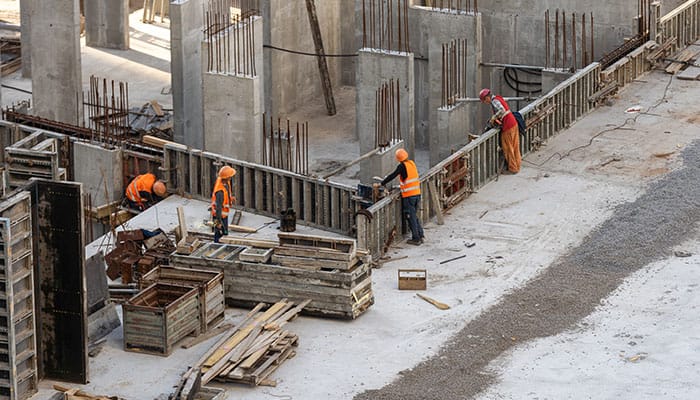
In parallel construction, different construction activities are carried out simultaneously rather than sequentially. Rather than waiting for one phase to be completed before starting the next, teams work in parallel to speed up the overall schedule.
For example:
- Structural elements can be fabricated while the site is still being prepared.
- While the foundations are being poured, wall and cladding systems can be manufactured off-site.
- Interior components can be planned and prepared even before the building envelope is fully complete.
This approach requires careful planning and coordination, as well as materials that facilitate rapid installation and ensure consistent performance.
Why parallel construction is gaining momentum
Faster project delivery
One of the biggest advantages of parallel construction is reduced build time. By overlapping tasks, projects can reach completion weeks or even months sooner than traditional methods.
Improved cost control
Shorter timelines often lead to lower labor costs and reduced exposure to delays. Parallel construction also helps identify potential issues earlier, minimizing costly rework.
Greater precision and quality
Parallel construction frequently relies on prefabrication and modular components. These elements are produced in controlled environments, improving accuracy and consistency.
Better collaboration across teams
Architects, engineers, manufacturers, and contractors must work closely together. This collaborative mindset often leads to better decision-making and smoother execution.
The role of materials in parallel construction
Not all materials are suitable for parallel construction. This approach depends on products that are:
- Lightweight and easy to handle.
- Consistent in quality and dimensions.
- Compatible with prefabrication and modular systems.
- Quick to install on-site.
This is where advanced panel systems, including FRP panels, play a critical role.
How FRP panels support parallel construction
Fiberglass Reinforced Plastic panels are well suited for modern construction workflows. Their properties align closely with the needs of parallel construction projects.
Lightweight and easy to install
FRP panels are easier to transport and install than many traditional materials. This supports faster on-site assembly and reduces labor demands.
Prefabrication-friendly
FRP panels can be manufactured to precise specifications before arriving on-site. This allows wall systems and cladding solutions to be prepared in parallel with other construction phases.
Durability without added complexity
Despite being lightweight, FRP panels offer excellent durability, moisture resistance, and long-term performance. This reduces concerns about damage during fast-paced construction schedules.
Consistent performance across projects
Parallel construction often involves repeatable designs or modular layouts. FRP panels deliver consistent results, making them ideal for scalable building programs.
Applications of parallel construction across industries
Parallel construction is increasingly used in sectors where speed and efficiency are critical, including:
- Commercial and industrial facilities.
- Healthcare and controlled environments.
- Educational buildings.
- Multi-unit residential developments.
- Modular and prefabricated construction projects.
In each of these cases, material selection directly impacts how smoothly parallel workflows can be executed.
Challenges to consider in parallel construction
While parallel construction offers clear benefits, it also comes with challenges that must be managed carefully:
Coordination and planning
Parallel workflows require detailed scheduling and strong communication across teams. Misalignment can lead to conflicts or delays.
Material compatibility
Materials must be available on time and meet exact specifications. Delays or inconsistencies can disrupt multiple workstreams at once.
Experienced partners
Working with reliable manufacturers and suppliers is critical. Partners must understand the demands of parallel construction and deliver consistent results.
Why Stabilit America fits the parallel construction model
Stabilit America specializes in engineered panel solutions designed for modern construction methods. Their FRP and polycarbonate products support prefabrication, modularity, and fast installation, making them a strong fit for parallel construction strategies.
By providing consistent quality, technical expertise, and scalable production capabilities, Stabilit America helps project teams confidently integrate panel systems into accelerated construction schedules.
Their experience across commercial, industrial, and architectural markets positions them as a valuable partner for projects that prioritize efficiency without compromising performance.
Building smarter with parallel construction
Parallel construction represents a shift toward smarter, more efficient building practices. By rethinking how projects are planned and executed, teams can reduce timelines, improve quality, and better control costs.
When paired with high-performance materials like FRP panels and supported by experienced partners such as Stabilit America, parallel construction becomes a powerful approach for delivering modern, scalable, and resilient buildings.
Frequently asked questions
How is parallel construction different from traditional building methods?
Traditional construction follows a linear sequence, while parallel construction overlaps design, fabrication, and installation. This reduces total project time and improves coordination when teams and materials are aligned.
What types of projects benefit most from parallel construction?
Projects with tight schedules, repeatable layouts, or modular components benefit the most. These include commercial facilities, healthcare buildings, multi-unit residential developments, and prefabricated structures.
Does parallel construction increase project risk?
When poorly coordinated, it can. However, with detailed planning, clear communication, and reliable suppliers, parallel construction often reduces risk by identifying issues earlier and shortening exposure to delays.
Why are panel systems important in parallel construction?
Panel systems simplify prefabrication and speed up on-site installation. Lightweight, dimensionally consistent materials help keep parallel workflows moving without bottlenecks.
Are FRP panels suitable for fast-track construction schedules?
Yes. FRP panels are lightweight, durable, and easy to install, making them well suited for prefabrication and accelerated build timelines common in parallel construction.
Sources consulted:
- https://www.procore.com/library/construction-fast-tracking
- https://www.weforum.org/stories/2025/01/modular-construction-productivity-circularity/
- https://theoffsiteguide.com/articles/6-examples-of-mmc-in-action

Stabilit America Inc. is a leading North American manufacturer of fiberglass reinforced panels (FRP) and polycarbonate sheets, with over 65 years of experience. The company offers the widest range of acrylic, polyester, and polycarbonate laminates, backed by international certifications (USDA, Greenguard, FM, ISO 9001, among others), serving industries such as industrial construction, transportation, and sustainable building.